
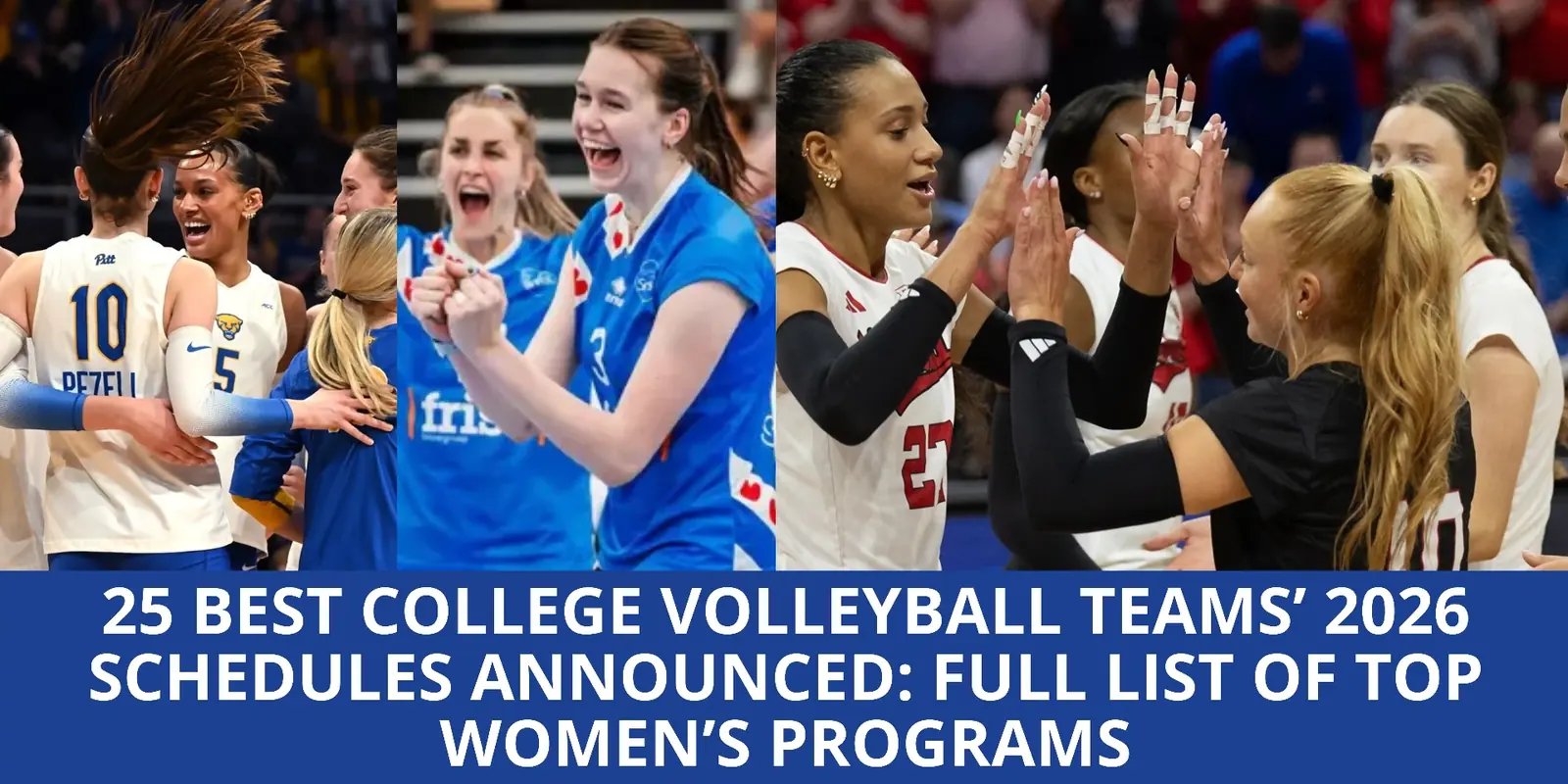
The 25 Best College Volleyball Teams’ 2026 Schedules are now one of the biggest talking points for women’s college volleyball fans. The full season picture is still developing for some programs, but many top teams have already started releasing dates, opening events, conference matchups, and early-season tournaments.
For fans, that means the 2026 season no longer feels far away. You can start circling rivalry matches, checking road trips, and watching how the strongest programs are building their path toward postseason volleyball.
That said, schedules can change. Match times, TV details, venue information, and even opponents may be updated by schools or conferences. The safest approach is to use this list as a fan-friendly overview, then confirm final details on each school’s official athletics website before buying tickets or making travel plans.
This guide focuses on schedule storylines and matchups. For the separate editorial selection of programs to watch, read our 2026 team watchlist.
Why the 2026 College Volleyball Schedule Matters
College volleyball schedules tell us more than dates and opponents. They show how confident a team is, how hard the coaching staff wants to test its roster, and where the biggest regular-season storylines may come from.
From what I’ve observed over the years, elite programs rarely build easy schedules. They want tough non-conference matches because those matches prepare players for conference play and NCAA Tournament pressure.
A schedule can also reveal:
- Which teams are chasing national respect early
- Which programs are testing young rosters
- Which conferences may dominate the national conversation
- Which matches could affect postseason seeding
- Which weekends fans should watch closely
At first glance, a schedule may look like a simple list. The reality is that it can shape the entire season.
25 Best College Volleyball Teams’ 2026 Schedules to Follow
Below is a practical fan watchlist of 25 major women’s college volleyball programs to follow during the 2026 season. This is not meant to replace an official NCAA ranking. It’s a schedule-focused list built around national relevance, fan interest, recent strength, conference competition, and matchup value.
| No. | Team | Conference | Why Fans Should Watch |
|---|---|---|---|
| 1 | Nebraska | Big Ten | Always one of the sport’s biggest draws |
| 2 | Kentucky | SEC | Strong national profile and tough early matches |
| 3 | Texas | SEC | Championship-level expectations every season |
| 4 | Pittsburgh | ACC | A consistent national contender |
| 5 | Stanford | ACC | Historic program with major conference storylines |
| 6 | Texas A&M | SEC | One of the most watched teams entering 2026 |
| 7 | SMU | ACC | Rising program with big-match potential |
| 8 | Arizona State | Big 12 | Dangerous team with strong non-conference interest |
| 9 | Louisville | ACC | Physical, well-coached, and built for big matches |
| 10 | Wisconsin | Big Ten | Huge fan base and yearly national expectations |
| 11 | Penn State | Big Ten | One of college volleyball’s classic powers |
| 12 | Creighton | Big East | A smart, disciplined team fans should not overlook |
| 13 | Kansas | Big 12 | Strong schedule value in a deep league |
| 14 | Purdue | Big Ten | Often tested by one of the toughest conferences |
| 15 | Oregon | Big Ten | Athletic team with interesting travel challenges |
| 16 | Minnesota | Big Ten | Always a dangerous league opponent |
| 17 | USC | Big Ten | A national brand adapting to Big Ten pressure |
| 18 | Georgia Tech | ACC | A tough opponent for any ranked team |
| 19 | TCU | Big 12 | A program with growing volleyball attention |
| 20 | Florida State | ACC | A tricky team in a competitive conference |
| 21 | Dayton | Atlantic 10 | A strong mid-major program with upset potential |
| 22 | BYU | Big 12 | Physical style and a passionate fan base |
| 23 | Utah | Big 12 | A team that can make league play uncomfortable |
| 24 | Baylor | Big 12 | A respected program with tough schedule spots |
| 25 | Florida | SEC | A major SEC name with national interest |
One thing many people overlook is that the “best schedule” doesn’t always belong to the highest-ranked team. Sometimes the most interesting schedule belongs to a team that plays several top opponents early, travels across time zones, or faces a brutal conference stretch in October.
Early 2026 Matches That Stand Out
The early season matters because it gives fans the first real look at rosters, transfers, freshmen, and lineup changes. Coaches may still be adjusting rotations, but those early matches can tell us a lot.
Some of the most interesting early matchups include major neutral-site events and high-profile non-conference contests. The AVCA First Serve event is especially important because it brings several national programs together before conference play takes over.
AVCA First Serve Matchups to Watch
The 2026 AVCA First Serve event includes several major women’s college volleyball programs and gives fans an early look at teams with national expectations.
Key matchups include:
- Texas A&M vs. Louisville
- Wisconsin vs. Kentucky
- Wisconsin vs. Louisville
- Texas vs. Arizona State
- Texas A&M vs. SMU
- Pittsburgh vs. Kentucky
- Pittsburgh vs. Xavier
- Texas vs. Marquette
I think early events like this are helpful because they show which teams are ready right away and which ones still need time. A common mistake I see is judging a team too strongly after one August match. In practice, coaches are often testing lineups, serving roles, and defensive systems during these matches.
Still, wins against strong opponents can matter later when selection committees review resumes.
What Makes a 2026 Volleyball Schedule Strong?
A strong college volleyball schedule usually has balance. It should test a team without wearing it down too early.
1. Quality Non-Conference Opponents
Good non-conference matches help teams prepare for league play. Programs like Nebraska, Texas, Wisconsin, Pittsburgh, Stanford, Kentucky, and Louisville often want early tests because their goals are bigger than just a strong regular-season record.
Many people assume an undefeated record always means a team is elite, but that’s not always true. Strength of schedule matters.
2. Tough Conference Road Matches
Road matches are where schedules get serious. Playing in front of loud home crowds can expose weaknesses. Big Ten, SEC, ACC, and Big 12 road trips are especially tough because there are fewer easy nights.
For example, a team may look comfortable at home but struggle when facing a top opponent on the road two days later. That is where depth, serving pressure, and ball control become important.
3. Rivalry Matches
Rivalry matches are often more unpredictable than rankings suggest. Nebraska vs. Wisconsin, Texas vs. Kentucky, Stanford vs. ACC contenders, and regional matchups involving programs like Creighton, Kansas, or Baylor can bring extra energy.
From what I’ve seen, rivalry matches often come down to serving runs and emotional control. The team that handles pressure better usually wins the key points late.
4. Travel Demands
The expanded conference landscape has made travel more important. Some teams now face longer road trips than they did in the past. That can affect practice rhythm, recovery, and match preparation.
A detail that’s easy to miss is how much travel can matter during back-to-back weekends. A difficult opponent is one challenge. A difficult opponent after a long trip is another.
Conference Storylines Fans Should Follow
The 2026 women’s college volleyball season should have several strong conference races. The exact standings will depend on rosters, injuries, and player development, but the main leagues already look interesting.
Big Ten
The Big Ten remains one of the most demanding volleyball conferences. Nebraska, Wisconsin, Penn State, Purdue, Minnesota, Oregon, and USC give the league serious depth.
In my experience, Big Ten schedules are tough because teams rarely get a soft stretch. Even a mid-table opponent can serve aggressively, defend well, and push a match to five sets.
SEC
The SEC has become even more important in volleyball conversations. Texas, Kentucky, Texas A&M, and Florida give the league national attention.
The biggest misconception is that SEC volleyball is only about a few programs. The league has improved in depth, and that can make road matches harder than casual fans expect.
ACC
The ACC has major volleyball names, especially Pittsburgh, Stanford, Louisville, SMU, Florida State, Georgia Tech, and North Carolina.
Here’s where things get interesting. Stanford’s presence in the ACC creates new travel and matchup dynamics. It also gives fans fresh conference matches that didn’t exist in the same way before.
Big 12
The Big 12 has several teams worth watching, including Arizona State, Kansas, TCU, BYU, Utah, and Baylor.
The Big 12 may not always get the same casual attention as the Big Ten or SEC, but it can produce difficult matches. Teams that serve well and defend with discipline can create upset chances.
Practical Tips for Fans Tracking 2026 Schedules
If you’re following the 2026 season closely, don’t rely on one schedule graphic from social media. Those posts are useful, but they may not include time changes, TV updates, or venue adjustments.
Use this simple approach:
- Check the official school athletics schedule first
- Confirm conference schedule updates
- Look for TV or streaming details closer to match week
- Recheck match times before traveling
- Watch for neutral-site event updates
- Follow official team social accounts for last-minute changes
If I were making travel plans myself, I’d wait until the school confirms the venue and start time. Volleyball schedules can shift because of TV windows, arena conflicts, or conference updates.
Common Mistakes Fans Make With Schedule Announcements
Mistake 1: Treating Early Schedules as Final
Schedules are often announced before every detail is locked. Times and broadcast information may come later. Sometimes opponents or venues can change too.
Mistake 2: Ignoring Midweek Matches
Weekend matches get more attention, but midweek matches can be tricky. Teams may have shorter rest, travel challenges, or less time to prepare.
Mistake 3: Overrating One Big Win
One big August or September win is exciting, but it doesn’t guarantee a deep postseason run. Teams grow throughout the year. A September version of a team may look very different by November.
Mistake 4: Forgetting About Injuries and Lineup Changes
Volleyball depends heavily on timing and chemistry. If a setter, libero, or key outside hitter is unavailable, a schedule can suddenly feel much harder.
Mistake 5: Looking Only at Rankings
Rankings are useful, but matchups matter. A lower-ranked team with strong serving can cause problems for a more talented opponent.
Important Notes Before Publishing or Sharing Schedules
Schedules, rankings, broadcast details, ticket prices, conference rules, and postseason information may change over time. Fans should always check official school athletics pages, conference websites, NCAA updates, and trusted volleyball organizations before making final plans.
This is especially true for:
- Match times
- TV and streaming information
- Neutral-site events
- Ticket availability
- Venue changes
- Conference schedule adjustments
- Postseason selection details
Based on my experience, the best schedule pages are updated throughout the season. A schedule article should not be treated as “finished” after one publish date.
Key Takeaways: 25 Best College Volleyball Teams’ 2026 Schedules
The 25 Best College Volleyball Teams’ 2026 Schedules give fans a strong early look at the programs, matchups, and conference races that may define the season. Nebraska, Texas, Kentucky, Pittsburgh, Stanford, Texas A&M, Louisville, Wisconsin, Penn State, and several other national programs should be followed closely.
The most useful way to read these schedules is not just by counting wins and losses. Look at travel, opponent strength, rivalry matches, conference depth, and how teams handle pressure early in the year.
The 2026 season should offer plenty of big matches, but fans should keep checking official sources. Schedules can change, and the most accurate information will always come from the schools, conferences, NCAA, and official volleyball organizations.
FAQ
Who are the best college volleyball teams to watch in 2026?
Top women’s college volleyball programs to watch include Nebraska, Texas, Kentucky, Pittsburgh, Stanford, Texas A&M, Louisville, Wisconsin, Penn State, SMU, Arizona State, Florida, and several other major conference teams.
Are the 2026 college volleyball schedules final?
Not always. Some schedules may be mostly complete, while others may still need match times, TV details, venue confirmations, or conference updates. Fans should check official school athletics pages.
What is the biggest early event in the 2026 women’s volleyball season?
The AVCA First Serve event is one of the biggest early events. It features several national programs and gives fans a strong opening look at the season.
Why do top teams play difficult non-conference schedules?
Top teams often play strong non-conference opponents to prepare for conference play and improve their postseason resume. Tough early matches can reveal strengths and weaknesses before league play begins.
Which conferences should fans watch most closely?
The Big Ten, SEC, ACC, and Big 12 should all be watched closely. Each league has several nationally relevant programs and difficult road environments.
Can rankings change before the 2026 season starts?
Yes. Rankings can change based on final polls, preseason voting, transfers, injuries, returning players, and coaching changes. Treat rankings as helpful context, not fixed truth.
Where should fans check official volleyball schedules?
Fans should check each school’s official athletics website, conference websites, NCAA.com, and trusted volleyball organizations such as AVCA.
Do TV times come out with the first schedule announcement?
Sometimes, but not always. Broadcast and streaming details are often announced later, especially for conference matches and special events.
Track Every Top Team All Season
Schedules, rosters, and rankings for the top 25 programs.