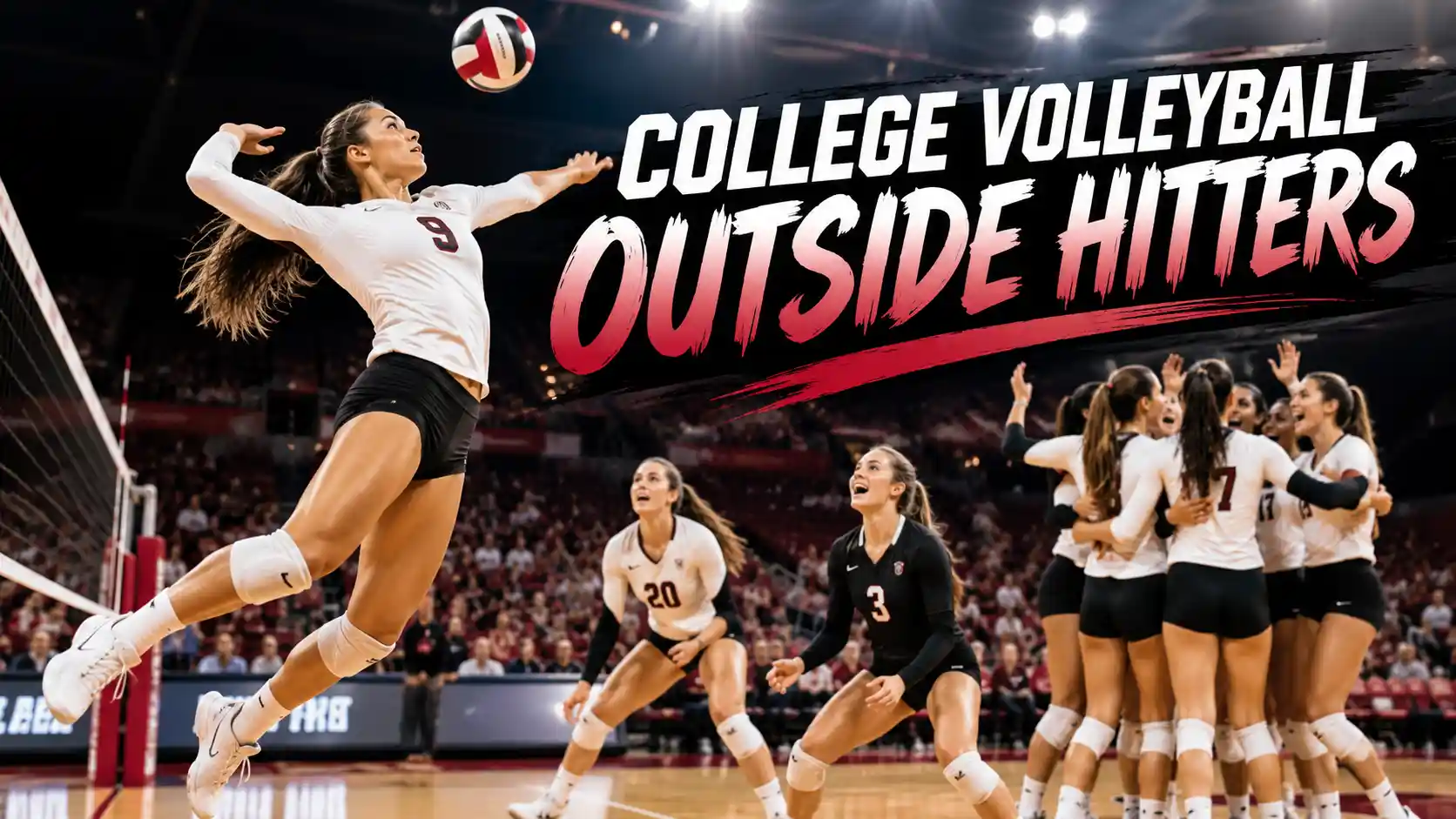
The best College Volleyball Outside Hitters are usually the six-rotation attackers who can score under pressure, pass serve receive, defend, and stay efficient against strong blocks. Teams such as Texas A&M, Kentucky, Pittsburgh, Nebraska, Texas, Stanford, Louisville, Penn State, Wisconsin, and Creighton often enter the national conversation because they recruit and develop strong left-side attackers.
That said, there is no single official ranking for "best outside hitters" across all college teams. Fans should compare outside hitters by production, efficiency, passing, defense, serving, rotation role, strength of schedule, and postseason performance.
A high-kill outside hitter is valuable. A high-kill outside hitter who can also pass, defend, and score late in tight sets is even more valuable.
Introduction
Outside hitter is one of the most watched positions in college volleyball. Fans notice the big swings first. They see the player taking the final ball in a close set. They remember the cross-court bomb, the sharp-angle kill, or the tool off the block.
But the position is deeper than power.
An outside hitter often carries the hardest all-around workload on the court. She may pass in serve receive, attack from the front row and back row, serve tough, defend left back, and take out-of-system swings when the setter is scrambling.
That is why comparing college volleyball outside hitters can be tricky. A player with huge kill numbers may not be the best all-around outside. A player with fewer kills may be more valuable if she passes well, limits errors, and stays steady against elite opponents.
This 25-team comparison looks at how top college volleyball programs usually build and use their outside hitters. It is written for fans who want to understand the position better, not just look at a box score.
What Is an Outside Hitter in College Volleyball?
An outside hitter is usually the left-side attacker. In most rotations, she attacks from the left pin in the front row. Many top outside hitters also attack from the back row.
The outside hitter is often called the "go-to" attacker because she gets many difficult sets. If the pass is off the net, the setter may send a high ball to the left side. If the rally is messy, the outside hitter may still need to create a smart swing.
A strong outside hitter usually does five things well:
- Scores from the left side
- Handles imperfect sets
- Passes serve receive
- Defends in the back row
- Controls errors under pressure
The best outside hitters are not only powerful. They are calm, complete, and hard to game-plan against.
College Volleyball Outside Hitters: 25-Team Comparison
This comparison is not an official ranking. It is a fan-focused look at programs that often have strong outside hitter play, strong recruiting, or recent national relevance. Use it as a guide to understand team styles and what makes each outside hitter group interesting.
| Team | Outside Hitter Profile | What Fans Should Watch | Fan Takeaway |
|---|---|---|---|
| Texas A&M | Physical pin attackers with confidence in big moments | Can the outsides score against elite blocks? | Championship-level teams need left-side attackers who finish rallies. |
| Kentucky | High-volume outside hitters who can carry long stretches | Efficiency under pressure | Kentucky's outside hitter play is often central to its attack. |
| Pittsburgh | Explosive scoring from pins and back-row options | Termination rate in tight sets | Pitt's best attackers can change a match quickly. |
| Nebraska | Balanced outsides in a system built on defense and control | Passing stability and low-error swings | Nebraska values complete outside hitters, not just big arms. |
| Texas | Long, athletic attackers with strong offensive range | Left-side scoring against top SEC teams | Texas usually has the talent to pressure any block. |
| Stanford | Technical, disciplined outside hitters | Shot selection and serve-receive quality | Stanford's outsides often play with patience and precision. |
| Louisville | Dynamic pin play with speed and physicality | How well outsides score out of system | Louisville needs pins who can win tough rallies. |
| Penn State | Traditional power program with strong left-side history | Big-match consistency | Penn State fans expect high-level outside hitter production. |
| Wisconsin | Big, physical attackers in a system with strong blocking | Balance between pins and middles | Wisconsin's outside hitters benefit from a strong front-row identity. |
| Creighton | Smart, efficient attackers in a well-organized offense | Ball control and transition swings | Creighton often wins with clean volleyball and smart pins. |
| SMU | Rising national profile with aggressive pin play | Can the outsides maintain efficiency against elite teams? | SMU's outside hitter group can help prove staying power. |
| Purdue | Physical Big Ten outside hitters who take heavy swings | Scoring against strong defensive teams | Purdue needs outsides who can handle high-volume attacks. |
| Minnesota | Athletic pins with strong defensive expectations | Six-rotation impact | Minnesota's best outsides usually need to do more than hit. |
| Oregon | Fast, creative offense with dangerous attackers | Tempo and left-side speed | Oregon's outside hitters can thrive when the offense stays quick. |
| Florida | SEC-level athletes with strong pin potential | First-contact quality | Florida's outside hitters are most dangerous when passing holds up. |
| Baylor | Strong, disciplined attackers with postseason experience | Error control in long rallies | Baylor's outside hitters can win with patience and control. |
| Kansas | Competitive pin play in a tough conference | Scoring variety | Kansas needs outsides who can manage big defensive pressure. |
| Arizona State | Energetic attackers with growing national attention | Consistency across rotations | Arizona State's outside hitter play can swing close matches. |
| USC | Athletic West Coast pins with high ceiling | Can the attackers stay efficient? | USC often has the talent; consistency is the key. |
| UCLA | Skilled attackers in a program with strong volleyball history | Serve receive and transition play | UCLA's outside hitters need to blend skill and athleticism. |
| Georgia Tech | Physical attackers who can pressure blockers | First-ball side-out rate | Georgia Tech can be dangerous when the pins score early. |
| Tennessee | SEC pin attackers with strong physical tools | Error management | Tennessee's outsides can create momentum with aggressive swings. |
| BYU | Disciplined, system-based attackers | Smart shots and block use | BYU's outside hitters often win with structure and discipline. |
| Marquette | Tough, steady pin play with strong coaching structure | Late-set decision-making | Marquette values dependable outside hitters who limit mistakes. |
| Dayton | Strong mid-major profile with efficient scoring | Can the outsides handle top-25 pace? | Dayton's pins are often tested most against bigger, physical teams. |
Why Outside Hitters Matter So Much
Outside hitters matter because they touch so many parts of the match. In practice, a team can hide a weak passer in some systems. It can run more offense through the middle if passing is great. It can use a strong opposite hitter to balance the attack.
But in real match pressure, the outside hitter still gets the difficult ball.
If the pass is off the net, the setter often sends a high ball to the left pin. If the defense digs a hard swing, the next set may go outside. If the team needs one point at 23-23, the outside hitter is often the first option.
That is why coaches love outside hitters who can score even when everyone in the gym knows the ball is coming to them.
How to Evaluate College Volleyball Outside Hitters
Many fans look only at kills. Kills matter, but they don't tell the full story. A better evaluation includes several areas.
1. Kills Per Set
Kills per set shows how often a player scores. High-volume outside hitters usually lead their teams in this category. Still, volume can be misleading. A player may get many kills because she takes many swings. Fans should also check efficiency.
2. Hitting Percentage
Hitting percentage shows how cleanly a player scores. It rewards kills and punishes errors. For outside hitters, hitting percentage is harder to judge than for middle blockers. Middles often get faster, cleaner sets near the net. Outsides take more difficult swings against formed blocks. So, a good outside hitter may not always have the highest hitting percentage on the team.
3. Attempts and Workload
Attempts show how much responsibility a player carries. An outside hitter with a heavy workload faces more pressure. She also sees more double blocks and defensive attention. A common mistake is comparing two hitters without looking at attempts. A lower-volume player may have better efficiency because she gets easier opportunities.
4. Serve Receive
Serve receive is one of the most overlooked parts of the outside hitter position. A six-rotation outside hitter must pass tough serves, then quickly transition into attack. That is hard. It takes footwork, confidence, and stamina. A hitter who passes well gives the setter more choices. That helps the middle blockers, opposite hitters, and back-row attack.
5. Defense
Good outside hitters don't disappear in the back row. They dig, cover tips, read hitters, and keep rallies alive. The best six-rotation players can score points and save points.
6. Out-of-System Attacking
Out-of-system attacking separates good outsides from great ones. A perfect pass allows the setter to run tempo. A bad pass creates chaos. In those moments, the outside hitter may get a high ball near the antenna with two blockers waiting. Great outsides still find ways to score or keep the ball in play.
7. Big-Match Performance
College volleyball is full of emotional swings. Road matches are loud. Conference matches are physical. NCAA tournament matches can expose weaknesses quickly. A strong outside hitter must handle pressure.
Fans should ask:
- Does she score late in sets?
- Does she stay aggressive after errors?
- Does she pass well against tough serving teams?
- Does she make smart choices when the block is set?
Different Types of College Outside Hitters
The Six-Rotation Star
This is the complete outside hitter. She passes, defends, serves, attacks, and stays on the floor in all rotations. These players are highly valuable because they don't need to be substituted out.
The Power Scorer
This hitter may be the team's main point scorer. She takes big swings and can carry the offense. Sometimes she is not the team's best passer, but her attacking value is too high to ignore.
The Ball-Control Outside
This player may not always lead in kills, but she stabilizes the team. She passes well, defends well, and makes smart attacking choices.
The Young High-Ceiling Attacker
Many elite programs rotate talented freshmen or sophomores into outside hitter roles. These players may be inconsistent early. Still, their physical tools can change a team's ceiling.
Practical Examples
Example 1: High Kills, High Errors
A player finishes with 22 kills. At first, that looks excellent. But if she also has 12 hitting errors, her team may have lost too many free points. In this case, fans should look deeper than the kill total. A smarter match may be 15 kills, 4 errors, and strong passing.
Example 2: Quiet Box Score, Big Impact
An outside hitter records only 10 kills. That may look average. But she passes most serves, digs 14 balls, and keeps the team in system all match. That player may be one of the main reasons her team wins.
Example 3: The Late-Set Test
A team trails 23-24. The pass is poor. The setter sends a high ball outside. The outside hitter has three choices:
- Swing hard into the block
- Tool the blocker's hands
- Roll deep to keep the rally alive
Great outside hitters make the right choice more often than not.
Common Mistakes or Misunderstandings
Mistake 1: Judging Only by Kills
Kills are easy to understand, but they don't show the whole role. Outside hitters also pass, defend, serve, and manage difficult swings.
Mistake 2: Comparing Outsides and Middles the Same Way
Middle blockers often hit at higher percentages because they get faster sets and face different blocking situations. Outside hitters usually take more emergency balls. Their efficiency should be judged with that context.
Mistake 3: Ignoring Serve Receive
A hitter who can't pass may force lineup changes. A hitter who can pass gives the coach more freedom. That matters in long matches.
Mistake 4: Overrating One Great Match
One huge performance is exciting. It does not automatically make a player the best. The stronger question is consistency. Can she do it across conference play and the NCAA tournament?
Mistake 5: Forgetting About Matchups
Some outside hitters dominate smaller blocks but struggle against elite physical teams. Others may not post huge numbers every night, but they perform well against top opponents.
Warnings, Exceptions, or Important Notes
College volleyball information changes quickly. Rosters can shift because of graduation, transfers, injuries, redshirts, international additions, and lineup changes. Awards and rankings also change throughout the season.
Fans should verify current details with:
- Official team roster pages
- NCAA statistics
- Conference websites
- AVCA rankings and awards
- Official match box scores
Another key point: "best outside hitter" depends on what you value. If you value scoring, you may prefer a high-volume attacker. If you value complete volleyball, you may prefer a six-rotation player. If you value postseason impact, you may focus on late-season matchups. The fairest answer usually combines all three.
Key Takeaways
The best College Volleyball Outside Hitters are not just powerful attackers. They are complete players who can score, pass, defend, serve, and handle pressure.
Across 25 major teams, programs such as Texas A&M, Kentucky, Pittsburgh, Nebraska, Texas, Stanford, Louisville, Penn State, Wisconsin, Creighton, SMU, and Purdue stand out because outside hitter play often shapes their national ceiling.
For fans, the smartest way to compare outside hitters is to look beyond highlights. Check kills, efficiency, attempts, passing role, defensive value, and performance against strong opponents. A big swing may win one point. A complete outside hitter can change an entire match.
FAQ
Who is the best college volleyball outside hitter?
There is no single official answer. The best outside hitter depends on scoring, efficiency, passing, defense, strength of schedule, and postseason performance.
What does an outside hitter do in volleyball?
An outside hitter attacks from the left side, passes serve receive, defends in the back row, serves, and often handles difficult out-of-system sets.
Why do outside hitters get so many sets?
Outside hitters often receive the ball when the pass is imperfect. The left-side set is one of the safest options when the setter is under pressure.
Is an outside hitter the same as an opposite hitter?
No. Outside hitters usually attack from the left side and often pass. Opposite hitters usually attack from the right side and may focus more on blocking and scoring.
What stats matter most for college volleyball outside hitters?
Kills, hitting percentage, attempts, digs, serve receive, aces, errors, and performance against strong opponents all matter.
Can a player be a great outside hitter without huge kill numbers?
Yes. Some outside hitters are valuable because they pass well, defend well, limit errors, and keep the offense stable.
Where can fans verify current outside hitter rankings and stats?
Fans should check NCAA statistics, AVCA rankings, official team rosters, conference websites, and official match box scores.
Editorial note: This article is written for informational purposes and should be verified with official sources where applicable. College volleyball rosters, rankings, awards, transfers, injuries, and lineups can change during the season.