
Rankings Explained
AVCA Rankings vs. RPI: What Is the Difference in Volleyball?
Sources reviewed ; current research and later results are reflected in this review.
The AVCA coaches poll and volleyball RPI are different tools. The poll records voters' judgments about teams. RPI is a results-and-schedule-based measure used within the NCAA's evaluation process. Neither should be treated as a live scoreboard, and neither automatically becomes the final tournament bracket.
That distinction explains a lot of October confusion. A team can be outside the coaches top 25 while occupying a strong position in another evaluation. Two lists can disagree without either being a typo, because they are asking different questions and may use different review dates.
This guide explains how to read those lists, where the NCAA committee's own rankings fit and what fans should check before making a selection argument. The examples are dated 2026 snapshots, rather than claims that every number remains current today.
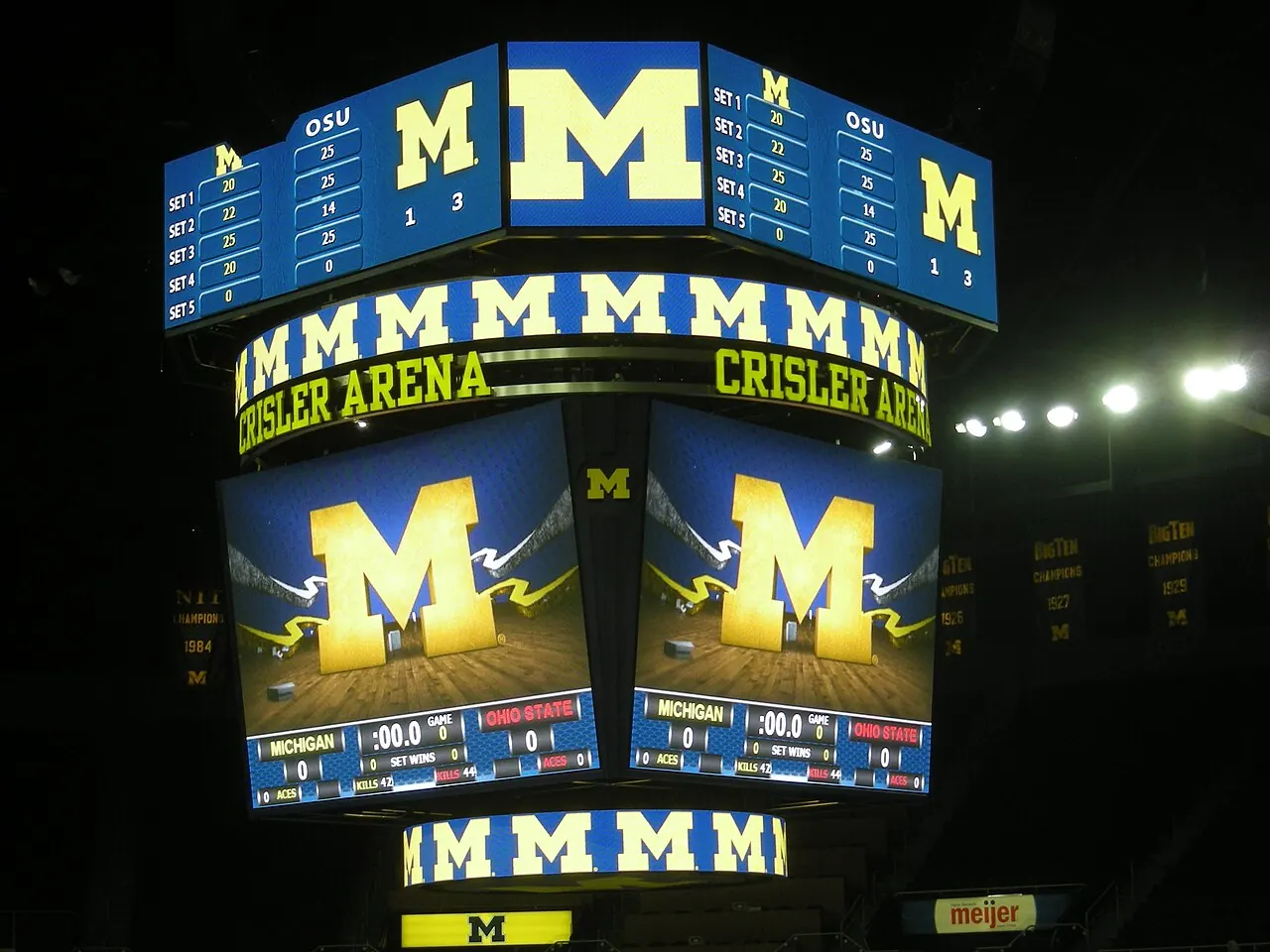
Image source and license
- Original photograph
- Ohio State vs. Michigan volleyball 2011 16.jpg
- Source address
- https://commons.wikimedia.org/wiki/File:Ohio_State_vs._Michigan_volleyball_2011_16.jpg
- License address
- https://creativecommons.org/licenses/by-sa/4.0
- Preparation
- Full frame retained; resized and converted to WebP for the web. Image remains available under its source license.
In this guide
What the AVCA poll tells you
The AVCA Division I women's poll is a coaches ranking. Its published table shows rank, voting points, record and other information associated with that release. The date is part of the meaning of the table, not a decorative heading. [1]
Use it to understand the national voting picture at that point in the season. It is a useful way to identify widely regarded teams and follow movement between releases. It does not tell you that every voter has evaluated every team identically.
Also distinguish poll points from standings points. A team does not earn a fixed number of AVCA points by winning a particular match. The number describes voting support in the published poll, rather than a league table scoring system.
What RPI is trying to describe
RPI stands for Rating Percentage Index. The NCAA's 2026 manual describes a base calculation combining a team's Division I winning percentage, opponents' winning percentage and opponents' opponents' winning percentage, weighted 25 percent, 50 percent and 25 percent, with specified adjustments. [2]
The practical idea is to put results into schedule context. A record is not read in isolation from the opposition. That is why two teams with similar win totals can have very different RPI positions.
Do not rebuild a simplified version from three visible numbers and assume you have reproduced the official calculation. Schedule data, exclusions and adjustments matter. Use the NCAA's published list for the actual ranking, then inspect the results behind it when you want to understand the position.
Compare the questions each list answers
| Tool | Useful question | Common mistake |
|---|---|---|
| AVCA coaches poll | How did the voting group rank teams for this release? | Treating it as the committee's bracket |
| NCAA RPI | How does the results-and-schedule calculation order teams? | Treating one position as a guaranteed invitation |
| Committee in-season ranking | How did the committee assess the available evidence at that point? | Treating October placement as the final seed |
| Conference standings | How are teams ordered within the league's race? | Assuming all leagues and schedules are directly comparable |
Before comparing any two entries, write the release dates beside them. A difference caused partly by timing should not be presented as a disagreement about the same set of results.
A useful 2026 example: UCLA
The Big Ten's October 21 release reports UCLA at No. 10 in that week's RPI and No. 13 in the committee's in-season top 16. The same release places UCLA among teams receiving coaches-poll votes outside the top 25. That is a concrete example of the lists telling different stories. [3]
The responsible conclusion is not that every unranked team is secretly a national seed. It is that “unranked” needs a definition. A team can be unranked in the coaches top 25 while appearing prominently in another assessment.
When discussing UCLA's position, identify the list and date. Saying only “UCLA is No. 13” leaves out the most important context. Saying “No. 13 in the committee's October assessment” gives the reader something they can understand and verify.
Why winning can produce an unexpected movement
In a schedule-based system, movement can reflect results beyond one team's latest match. Opponents and opponents' opponents continue playing too. Your team can win while the surrounding comparison changes in a way you did not expect.
That is why a fan should resist reading every rise or drop as a direct reward or punishment for the most recent result. Look at the broader data and the release window before inventing a story about what one match “did” to the number.
For the coaches poll, voter judgment adds another kind of movement. A team can be overtaken because another program's evidence becomes more persuasive, even if it did not suffer an obvious setback. Relative order is not a private grade assigned to one team alone.
Why a demanding schedule does not answer everything
Schedule difficulty matters when evaluating results, but the presence of strong opponents is not the same as beating them. Separate opportunities from accomplishments when you describe a team's case.
Imagine a hypothetical team that repeatedly plays strong opposition but rarely wins those matches. Another team may have fewer visible opportunities but useful wins within its schedule. The comparison needs more care than simply counting famous opponents.
The opposite shortcut is just as weak: dismissing a team with several losses without checking who it played. The point of looking beyond the record is to understand context, rather than replacing one automatic judgment with another.
A ranking is not a selection threshold
Avoid claims such as “No. 40 always gets in” unless you have established the actual season's field and rules. Automatic qualification and the comparative selection process make a universal cut line an unreliable shortcut.
A team may be in a good position without being mathematically guaranteed. Another may need more work without being eliminated. Use language that matches the evidence instead of turning an editorial projection into a statement of fact.
Our bubble-watch article uses dated evidence and conditional judgments for that reason. It is a guide to following uncertainty, rather than an announcement from the committee.
Where the committee's in-season release fits
A committee ranking is especially interesting because it comes from the group assessing the championship field. It still reflects a particular point in time. Teams continue playing after the release, and the final selection process occurs later.
Use an in-season top 16 to understand the committee's published assessment, then track what changes afterward. Do not freeze it into a final bracket or assume that every unlisted team is outside the entire tournament field.
The 2026 selection show is the appointment when the official bracket replaces projections. Until then, keep committee snapshots, poll releases and your own analysis clearly labeled.
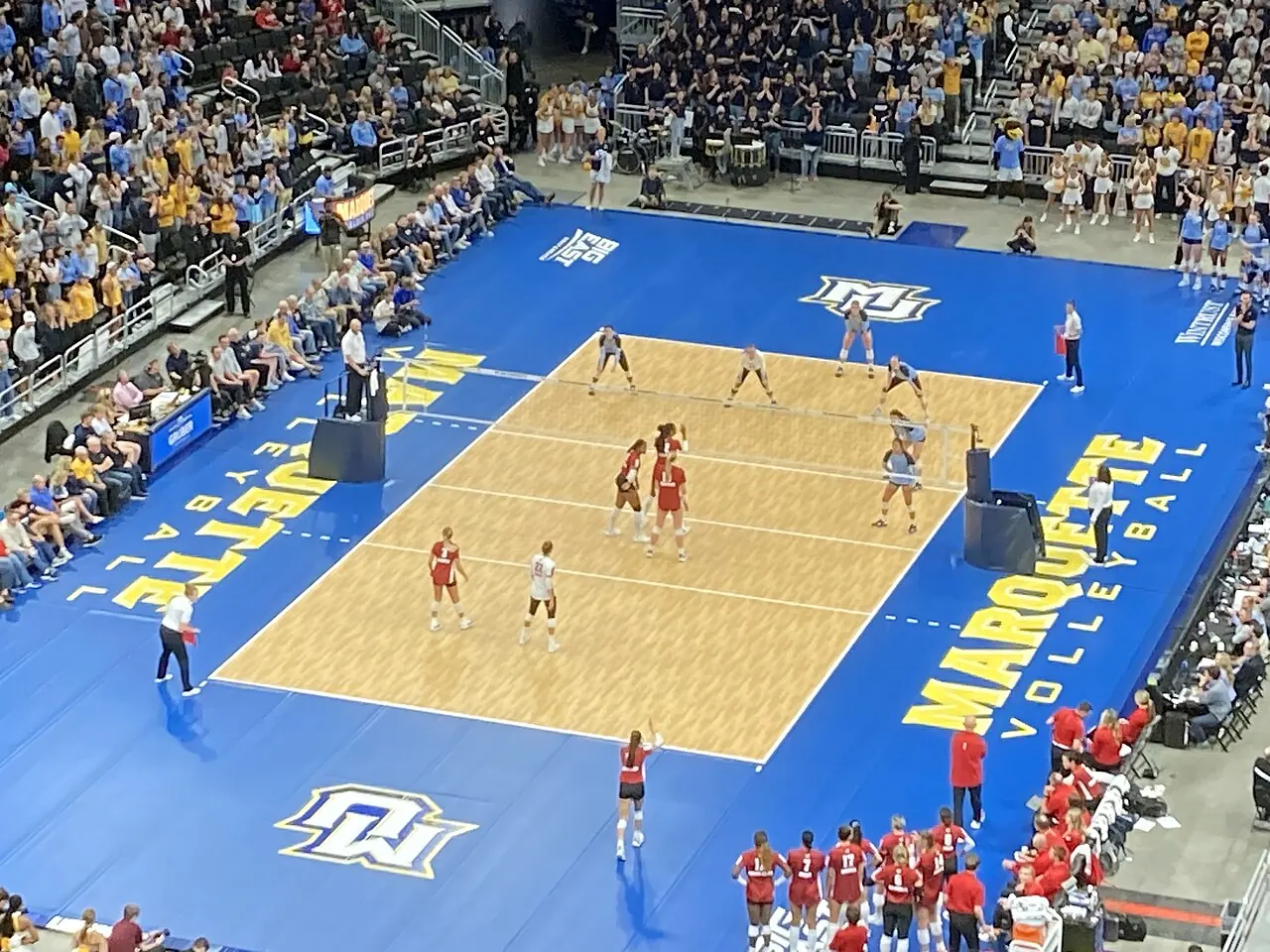
Image source and license
- Original photograph
- Wisconsin vs. Marquette women's volleyball 2023 14 (in-match action).jpg
- Source address
- https://commons.wikimedia.org/wiki/File:Wisconsin_vs._Marquette_women%27s_volleyball_2023_14_(in-match_action).jpg
- License address
- https://creativecommons.org/licenses/by-sa/4.0
- Preparation
- Full frame retained; resized and converted to WebP for the web. Image remains available under its source license.
How to read the records beside rankings
A record belongs to the release that prints it. If the poll was published Monday and your team won Friday, the table's older record can still be correct for that poll. Updating it silently would make the row inconsistent with the published snapshot.
For current results, use the scores page or the team's official schedule. For the voting picture, use the dated poll. Those pages perform different jobs and do not need to pretend they share the same refresh cycle.
When sharing a screenshot, include the heading and date. Cropping them away can turn a perfectly accurate historical table into a misleading claim about today's standings.
A better way to compare two teams
Begin with the full records and schedules, then identify meaningful wins, losses and direct comparisons. Check the same ranking system for both teams using the same release. Do not select whichever list makes your preferred team look best.
If one tool favors Team A and another favors Team B, say so. The disagreement can be the interesting part of the analysis. Explain which evidence matters to your own judgment instead of pretending all systems point in the same direction.
Keep subjective and factual statements separate. “I prefer Team A's case” is an opinion you can support. “The committee has selected Team A” is a factual claim that requires an official announcement.
Check which season and division you opened
Search results can place women's Division I rankings beside men's, beach, Division II or previous-season pages. Before interpreting the table, confirm the competition, season and release date. Similar school names and familiar logos do not establish that you are reading the intended list.
Also inspect what the page calls its own measure. An independent power rating can be interesting without being NCAA RPI. A publisher's projection can be useful without being the committee's ranking. Describe the tool by its actual name so readers do not mistake an editorial model for an official release.
If a page does not explain its method or review date, treat its precision cautiously. A detailed-looking number can be harder to interpret than a modest, well-labeled snapshot. Clarity about the source is part of understanding the ranking, rather than an optional detail added after the argument.
What fans can safely take away
Use the AVCA poll for the coaches' voting picture, RPI for a schedule-and-results measure and committee releases for the committee's dated assessment. Conference standings add another layer, particularly when following automatic qualification races.
No single list needs to do every job. A richer picture comes from understanding why the tools differ and then looking at the actual matches. That is more useful than arguing that one number must invalidate all the others.
Our rankings page labels its published poll snapshot. Pair it with a team's schedule when you want current results and context. Keep the source, date and purpose beside every ranking, and most apparent contradictions become much easier to explain.
Sources
- AVCA: Division I women's pollshttps://www.avca.org/polls-awards/polls/?_divisions=division-i-women&_season=2026&_weeks=week-8
- NCAA: 2026–27 selection manual and RPI descriptionhttps://ncaaorg.s3.amazonaws.com/championships/sports/volleyball/d1/women/2026-27D1WVB_PreChampsManual.pdf
- Big Ten: October 21–27 weekly releasehttps://bigten.org/news/2026/10/21/big-ten-weekly-volleyball-central-oct-21-27.aspx
- NCAA: Official women's volleyball RPIhttps://www.ncaa.com/rankings/volleyball-women/d1/ncaa_womens_volleyball_rpi