
Tournament Explained
NCAA Volleyball Seeding Explained: Who Gets to Host?
Sources reviewed ; current research and later results are reflected in this review.
NCAA volleyball seeding helps organize the tournament field and influences which teams receive hosting opportunities. It does not mean that every seeded team hosts, or that a seed number printed beside a team is its overall national ranking.
For the 2026 Division I women's championship, the NCAA manual describes 32 seeded teams across four regions with seed lines one through eight. The top 16 are identified in rank order and assigned to the first four seed groups. Hosting also depends on meeting the NCAA's site requirements. [1]
That structure is easier to understand when you separate three questions: did the team qualify, what seed did it receive, and where will it play? This guide walks through those layers and shows how a fan can read the bracket without confusing a possible path with a promised one.
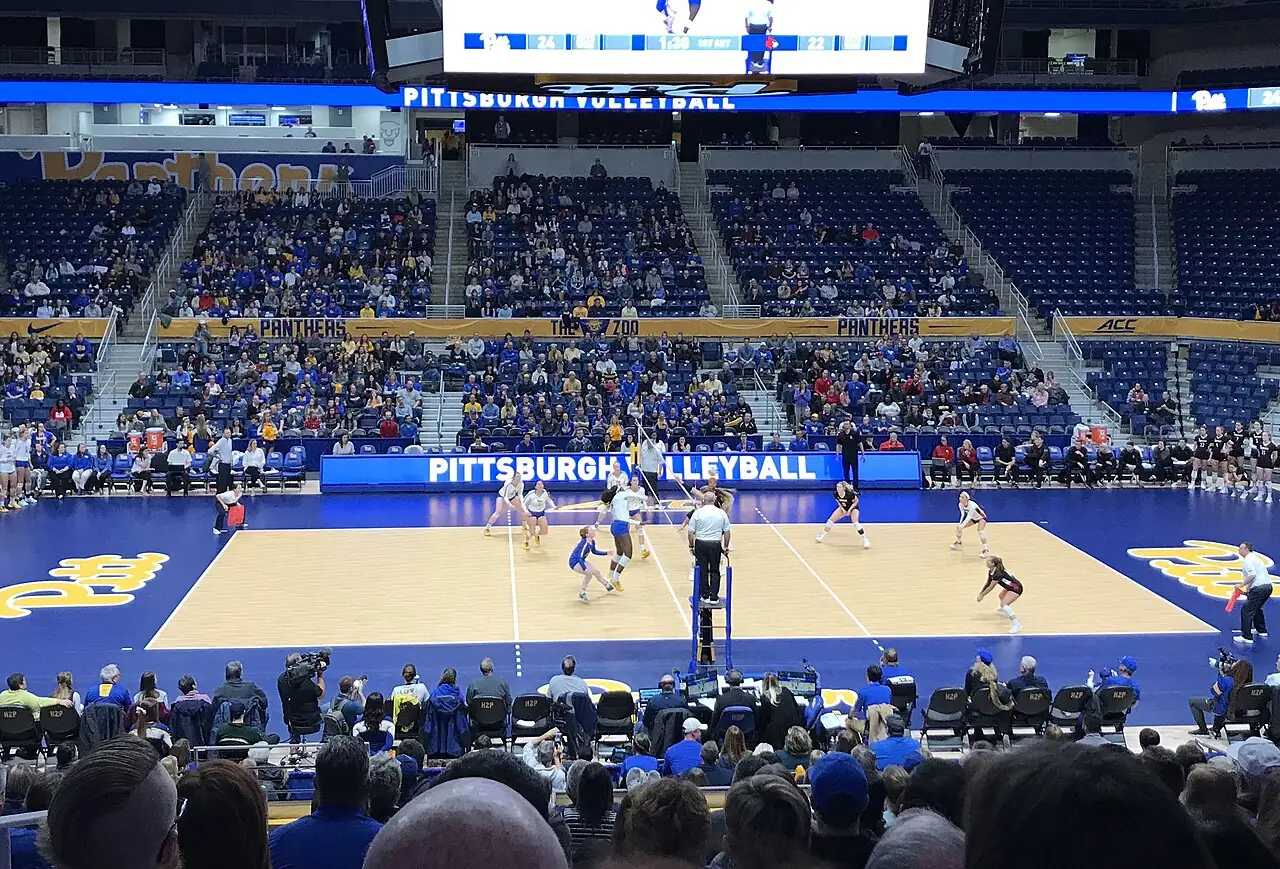
Image source and license
- Original photograph
- PittVolleyball2019Pete.jpg
- Source address
- https://commons.wikimedia.org/wiki/File:PittVolleyball2019Pete.jpg
- License address
- https://creativecommons.org/licenses/by-sa/4.0
- Preparation
- Full frame retained; resized and converted to WebP for the web. Image remains available under its source license.
In this guide
Selection comes before the path through the bracket
Qualification determines which teams enter the tournament. Seeding organizes part of that field. Bracketing then places the teams into matchups and sites under the championship's rules.
A fan of a bubble team may care first about hearing the school's name. A fan confident of selection may be focused on the seed line and host location. Both are watching the same reveal but waiting for different information.
Keep a short note for each stage. “Selected, seeded, hosting” is clearer than a single emotional reaction to a graphic. If you need the first layer, our qualification guide explains automatic berths and at-large consideration.
Why a No. 1 seed is not the only No. 1
The bracket has four regions, so seed lines repeat. A team labeled No. 1 in one region and a team labeled No. 1 in another are both regional top seeds. Their repeated label does not mean they occupy the same position on an overall ordered list.
That distinction also matters further down the bracket. A No. 4 seed in a region is not automatically the fourth-best team nationally. Read the graphic's structure before turning the printed number into a national claim.
A simple hypothetical example helps: if four separate regions each contain seed lines one through eight, the line identifies a team's position within that regional structure. You need additional context to discuss its overall place among all seeded teams.
What the 2026 seeding framework confirms
The current manual establishes the seeded half of the 64-team field and the grouping structure. It also states that first- and second-round conference matchups are avoided. Once seed assignments are established, the published procedure keeps them fixed while placing teams in the bracket. [1]
For a reader, that means a bracket is not just a computer sorting teams by one public ranking and drawing straight lines between consecutive numbers. There are championship-specific procedures to follow.
Do not assume that a nearby travel pairing proves two teams are considered equally strong, or that a familiar opponent should appear in the first round. Read the bracket as the outcome of the actual process, rather than reverse-engineering a completely different system from one matchup.

Image source and license
- Original photograph
- University of Wisconsin Field House.jpg
- Source address
- https://commons.wikimedia.org/wiki/File:University_of_Wisconsin_Field_House.jpg
- License address
- https://creativecommons.org/licenses/by-sa/2.0
- Preparation
- Full frame retained; resized and converted to WebP for the web. Image remains available under its source license.
Who hosts the first weekend?
The early rounds take place at campus sites, with the top seeds positioned for hosting opportunities under the applicable bid and site requirements. A seed matters, but a school still needs to satisfy the conditions for hosting. The NCAA's championship information distinguishes the opening rounds from later regional competition. [1] [2]
For fans, the practical point is to wait for the confirmed host announcement. A projected seed is not a venue booking. Even a confident prediction should not become an excuse to buy nonrefundable travel before the bracket is official.
After selection, check the host school's tournament page. It should be your starting point for the exact building, session times, tickets and any event-specific entry rules. A regular-season venue page may not contain everything required for NCAA competition.
A seeded team can still travel
Because more teams are seeded than there are opening-weekend hosts, a seed alone does not mean a home match. This is one of the most common misunderstandings when fans see a number beside their team's name.
Check the site label and the host's identity. If your team appears in another school's group, it is traveling there even if it carries a seed designation. Keep the opponent and location together in your notes.
A hypothetical No. 6 regional seed playing at another program's site is not an administrative mistake merely because it is seeded. The important question is how the bracket places that team, rather than whether it has any number at all beside its name.
Regional hosting is a separate stage
Teams surviving the opening weekend advance into regional competition. The relevant host question then becomes which qualified team and site will stage that part of the bracket under NCAA procedures.
Do not assume that every opening-weekend host keeps hosting automatically. A team's advancement and the later hosting arrangements both matter. Our postseason hub can help you follow the competition, but the official bracket and site announcements settle the actual location.
For travel, make decisions in stages. Confirm the opening site first. If your team advances, confirm the regional site before booking the next leg. This approach may feel less dramatic than planning the whole month on selection night, but it avoids building an itinerary around unplayed matches.
What an upset changes
An upset changes which team advances along an existing path. It does not mean that the winner simply inherits every benefit associated with the defeated team's original seed. Later hosting questions still follow the championship's rules and confirmed announcements.
That matters for fans who see a favorite lose and immediately assume their own team will now play at home. Pause and check the official update before treating that outcome as settled.
The bracket path itself is easier to follow: the winner advances to the next connected match. The location and session details can require another check. Keep those two pieces separate so a correct prediction about the opponent does not become an incorrect assumption about travel.
Why bracket difficulty is more than a seed number
A seed provides useful structure, but it does not describe every tactical matchup. Two teams with similar placements can challenge a particular opponent in different ways through serving, blocking, offensive tempo or roster depth.
When evaluating a draw, start with the first opponent rather than the most famous name in the region. Ask how that match might be played and which strengths or weaknesses actually meet across the net.
Avoid treating a lower seed as an easy win. Tournament matches are decided by performance, not by the graphic. A team can have a favorable-looking path on paper and still face a difficult first night if it cannot execute its own game.
Rankings and seeds do not have to match
The AVCA poll, RPI and committee assessments serve different purposes. A team can occupy different positions across them because the methods and review dates differ. The final seed should not be assumed to copy the coaches poll automatically.
When comparing lists, put the dates beside the numbers. A poll from early October and a bracket announced in late November are describing different stages of the season. Some apparent disagreements are partly timing problems.
Read our rankings explainer before calling a difference a contradiction. The useful analysis identifies what each list measures and what evidence changed, rather than assuming one familiar ranking controls every decision.
Reading the bracket on selection night
Find your team's name, seed designation, opening opponent and host site. Then identify the other match at that site and the next connection in the bracket. That gives you the confirmed opening path without skipping ahead through hypothetical wins.
Save the official bracket rather than relying only on a cropped social post. Partial graphics can hide the host label, another team's seed or the connection between sites.
Once the first details are clear, look for the school's official release. It can provide practical information about tickets and timing that the television reveal does not explain. Our selection show guide covers the confirmed broadcast appointment and what to have ready.
Tickets, sessions and realistic planning
Check whether a ticket covers one match, one session or a broader package. Confirm the team you intend to see is included. If two matches share a session, the later first serve may depend on the earlier match's length.
Do not assume that a regular-season ticket, season pass or familiar parking arrangement carries over unchanged. Use the host's current NCAA event instructions, including any mobile-ticket or entry requirements.
For a group, check seat locations and transfer arrangements before buying. For travel, allow time around the match. Volleyball does not run to a fixed clock, and a close contest can stretch an otherwise neat itinerary.
Keep the host label in shared screenshots
If you share a bracket graphic, include the site name as well as the teams. A cropped image can preserve the opponent while removing the location that makes the information useful for travelers. Add the source date when the graphic is a projection rather than the final bracket.
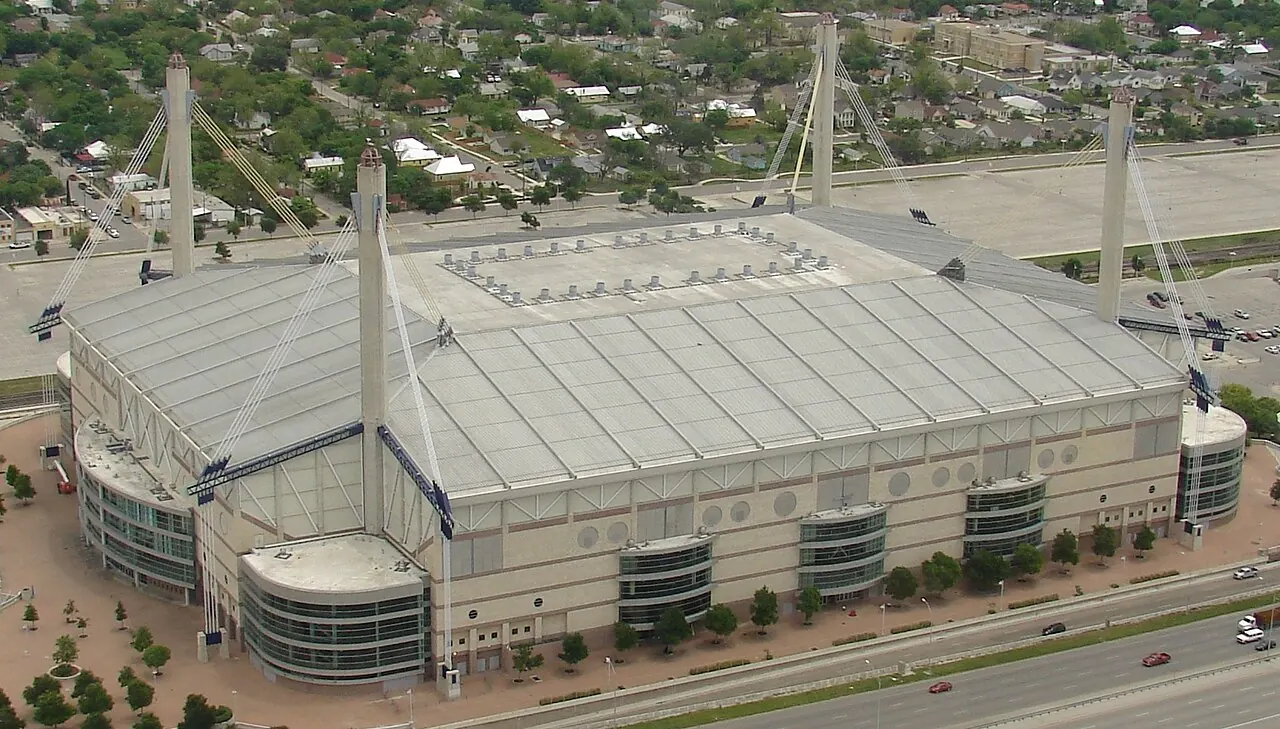
Image source and license
- Original photograph
- Alamodome, San Antonio (1).jpg
- Source address
- https://commons.wikimedia.org/wiki/File:Alamodome,_San_Antonio_(1).jpg
- License address
- http://creativecommons.org/licenses/by-sa/3.0/
- Preparation
- Full frame retained; resized and converted to WebP for the web. Image remains available under its source license.
The final weekend is different
The national semifinals and championship move to the predetermined championship venue. In 2026 that destination is San Antonio's Alamodome on December 17 and 20. The host venue confirms the event dates and ticket route. [3]
At that point, the question is whether your team has earned its place, rather than whether its seed lets it host. Read our Final Four travel guide if you are considering the trip.
For every earlier stage, remember the same sequence: selection establishes participation, seeding shapes the bracket, hosting establishes location and the matches decide advancement. Keeping those layers separate makes the whole tournament easier to read.
Sources
- NCAA: 2026–27 women's volleyball prechampionship manualhttps://ncaaorg.s3.amazonaws.com/championships/sports/volleyball/d1/women/2026-27D1WVB_PreChampsManual.pdf
- NCAA Tickets: Championship informationhttps://www.ncaatickets.com/womens-volleyball-championship-information
- Alamodome: 2026 NCAA women's volleyball championshiphttps://www.alamodome.com/events/detail/ncaa-d1-womens-volleyball-championship-2026